The Names of the Dead of the Justice CemeteryJohn Justice (1755-1831)
JusticeVenableMartha Ann Beazell Justice ( 1824-1867) (Martha Venable)
Susan Melvina Justice (1828-1904) (Susan Melvina Flanigan)
WallisFlaniganBrooks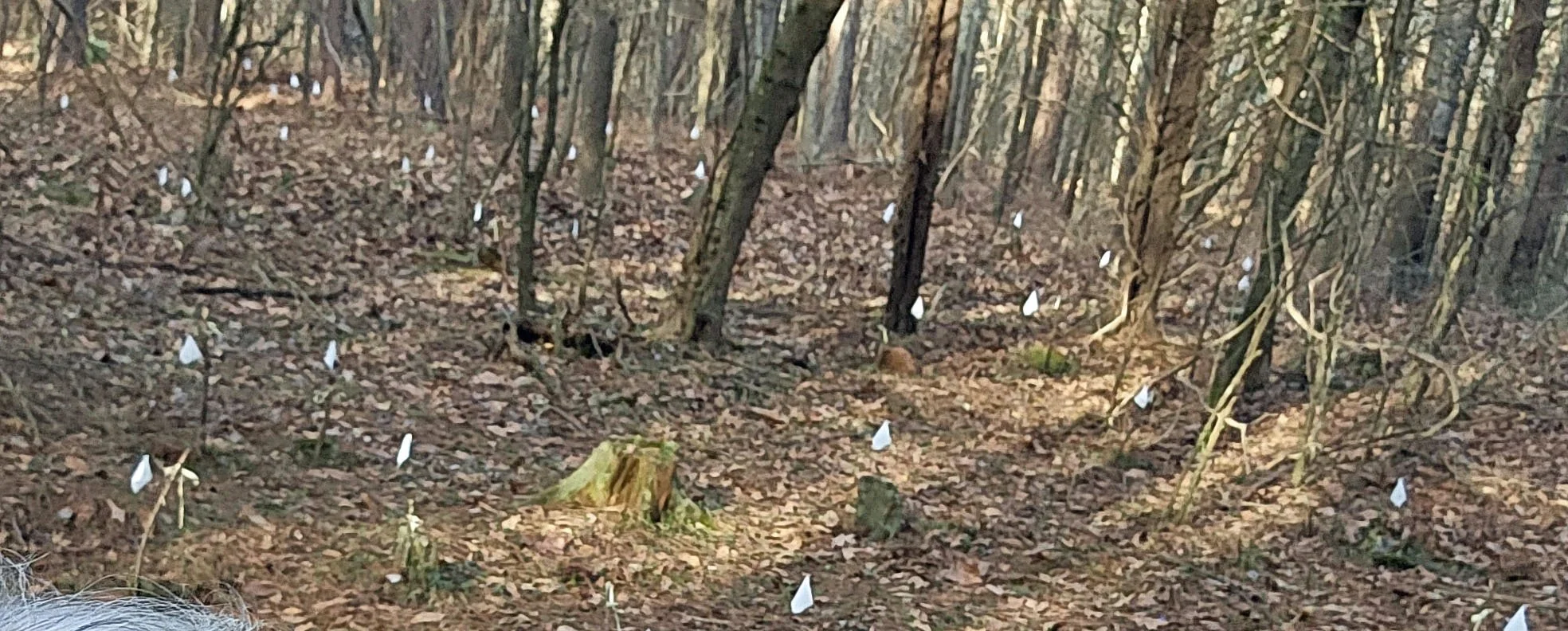
The Unnamed
The Enslaved People of the Justice Farm
Enslaved men, women, and children lived and worked on the Justice farm from the 1809 arrival of John Justice. We do not know which of them are buried in the Justice Cemetery.
In the 1820 census, John Justice reported 6 enslaved persons on the farm. That number rose to 8 in 1830 and to 9 by the time of his death in 1831. His son, Allen Justice, reported 2 additional enslaved persons.
The following is a list of the known names of African Americans enslaved on the Justice farm before the end of the Civil War. Their names and descriptions are preserved in the wills and testaments of John Justice (1755–1831) and his son Allen Justice (1793–1858):
Sam, a man
Ned, a boy
Big Lid, a woman
Zemely, a girl
Little Lid, a girl
Amy, a woman
Old Lidia, a woman
Betsy, a girl
Hannah, a woman
Absalom, a man
Dooly, a man
By the end of slavery in 1865, only Absalom and Hannah remained on the farm. By 1870, both were gone. Absalom, and likely Hannah, left Jackson County for neighboring Hall County.
On July 17, 1867, Absalom registered to vote in Hall County under the name Absalom Justice. He joined more than 90,000 Freedmen in Georgia who, in that year, publicly declared their presence and asserted their rights as citizens in a state that had once enslaved them.
Despite widespread violence and intimidation from white supremacist groups, Black men were elected to office during Reconstruction, and some civil rights protections were won. Absalom’s act of registering to vote was part of this broader struggle: the first step on a long road filled with obstacles.
Note. The small number (n=10) of enslaved persons recorded over time living on the Justice farm (1820-1860) contrasts with the large number of likely slave graves (n=40-50) currently observed in the cemetery (photo above). This disparity suggests that the cemetery may have also been the site of interment of enslaved persons from nearby farms and plantations with larger numbers (Lyle, Moon). The Justice Cemetery has been described in documents as “the Lyle cemetery” and in the press as the “Moon family burial ground.”